
Your heritage, shared with the whole world.
Without travelling.
We capture your heritage spaces in photorealistic 3D and deliver an immersive experience you can explore from a simple web link. For your visitors, for your archives, for your reach.
Launch the experience
Free navigation. No installation.
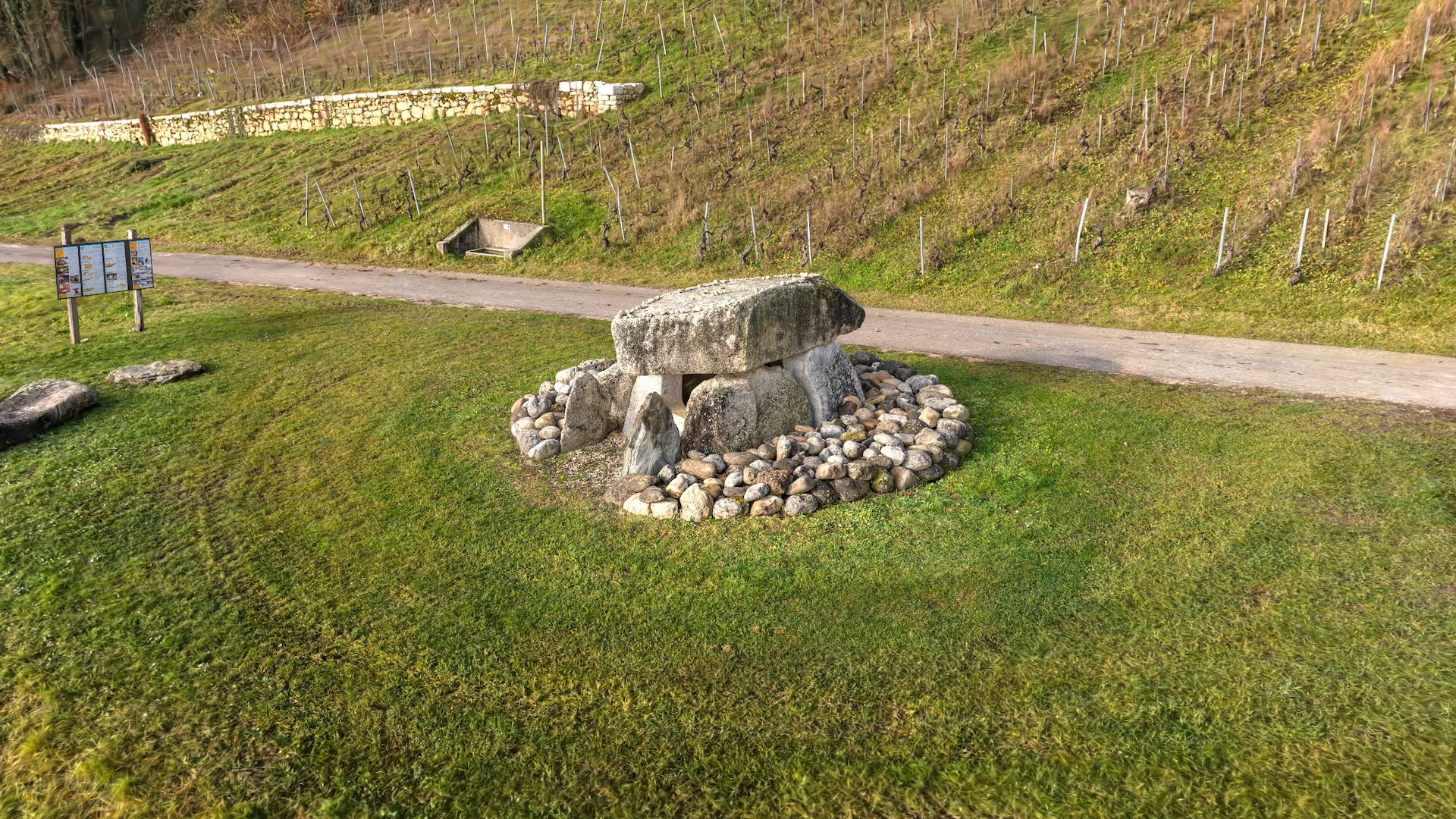
Onnens dolmen, captured in 2026. Explore freely.
What your visitors cannot always do
Four real constraints. One concrete answer.
"Our audience is far away geographically, how do we give them access?"
"Our building is going to be renovated, how do we preserve its current state?"
"Our temporary exhibitions disappear, how do we archive them?"
"Not all our spaces are wheelchair accessible, how do we compensate?"
Use cases
Archiving before renovation
Preserve the current state of your building before any transformation. A faithful 3D archive, forever.
Remote visits
Make your venue accessible around the clock to people with reduced mobility, distant audiences and international partners.
Digital reach
Share your exhibition or collection on social media, on your website, in your communications.
Educational tool
Bring the virtual tour into your school and university programmes. The place comes to them.
Public consultation
Share an urban or heritage project with citizens before the works. 3D makes it easier to understand.
Augmented tourism
Before the visit to spark interest, after the visit to extend the experience.
Packages suited to heritage
Depending on your need, two packages. One to tell the story of your venue, the other to make it interactive.
Story package
Editorial content, narrative journeys, text, audio or video points of interest built in. Your 3D model becomes a cultural mediation tool.
See the package →Experience package
Interactive guided tour, quizzes, gamification for young audiences, enriched tourism experiences. What 3DGS makes possible and nothing else does.
See the package →